MOUTHY PRETEEN
Q: Do you know what website I could go to or give me some information on
how to control my daughter (mouth).She is very verbal when she gets
upset.I am divorced, but have been remarried for 5 years, and she is
Basically very rude to step father who is more than generous to her, and
she still treats him nasty, and in public she is nasty when she gets
embarrassed or if things don't go her way.Is it the age, or is the
divorce, do I need to get her to counseling, or is this something I can
try to fix at home.Mary
A:All of your questions are good ones, so I'm going to take them one by
one. First, is it the age?Well, research and experience tell us that
adolescence begins much sooner these days than it used to. Most parents
report that pre-teens (ages 10-12) are often mouthy, easily embarrassed by
parents, and moody. It's also true that many adolescents these days feel a
sense of entitlement: they genuinely don't "get" that adults want to be
treated with respect, or that young people don't actually have the same
rights and privileges as their parents and teachers.Getting into your
daughter's world to understand her physical and emotional development will
give you important clues about her behavior.
Second, is it the divorce (and your remarriage)? Possibly. You don't say
what relationship (if any) your daughter has with her birth dad, but divorce
and remarriage do have a significant effect on children. Just because you
have fallen in love with your husband does not guarantee that your daughter
will love (or even like) him. She may be missing her own dad; she may be
angry at you for the divorce. Research tells us that it takes stepfamilies
anywhere from three to seven years to truly settle in and feel comfortable.
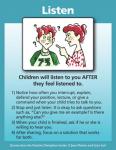
You can practice good communication skills by getting beyond your daughter's
behavior to her feelings and listening to what she has to "say."(Remember
that her body language and behavior are forms of communication, unpleasant as
they may sometimes be.) Ask for her cooperation and respect; let her know
that affection and trust for her stepfather may take some time. Family
meetings to solve problems together may help. For more information, see
.
Another possibility is that she may not be getting training and
practices in how to be respectful. Some parents (I'm sure this doesn't
include you) are either too permissive or too strict and then wonder why
their children rebel and act disrespectful. Some parents think is it helpful
to lecture their children about being respectful (even though if they watched
closely they would see that their children tune out to lectures). There are
many ways to help children practice the skills of respect. One is through
family meetings where you start with compliments. Every one learns to look
for good things to say about each other and to verbalize what they see. This
takes practice. Then they can focus on solutions by brainstorming for ideas
that would solve the problemand that would be respectful to everyone. Just
including kids in the process is very respectfuland they are more likely to
follow plans that they have helped create.
Another is to model what you will do instead of what you will make her do.
When she talks rudely to you, just walk away. Don't react, and don't say a
word. Actions speak much louder and words. What you are modeling is that you
can't make her respect you, but that you can respect yourself my not standing
still for verbal abuse. (Wouldn't it be wonderful if she learned this way to
show self-respect when others are verbally abusive to her?) Later you can
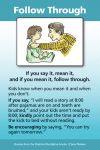
follow through by saying, "Honey, I know we both love each other and I know
we can have a respectful relationship. Now that we have calmed down, why
don't we find a solution to the problem that would work for both of us."
Last but not least, do you need to take her to counseling? You may not
"need" to: but a skilled and compassionate family therapist can help all of
you learn to talk, to listen, and to solve problems together. Young people
often respond well to therapy (once they get there) when they understand that
it is a place where they can sort through their feelings and find
understanding.
There is undoubtedly a lot going on for your daughter right now. Her
behavior needs work, but finding out the beliefs and feelings behind her
behavior will help. It's never too late to begin.
Good luck!
Cheryl L. Erwin, MA, MFT, Certified Positive Discipline Associate and
Co-author of Positive Discipline The First Three Years, Positive Discipline
for Preschoolers, Positive Discipline for Single Parents, and Positive
Discipline for Blended Families (until we sell out of this one), and Parents
Who Love Too Much.